What Is Tarot Reading? Meaning, Purpose, and How a Reading Works
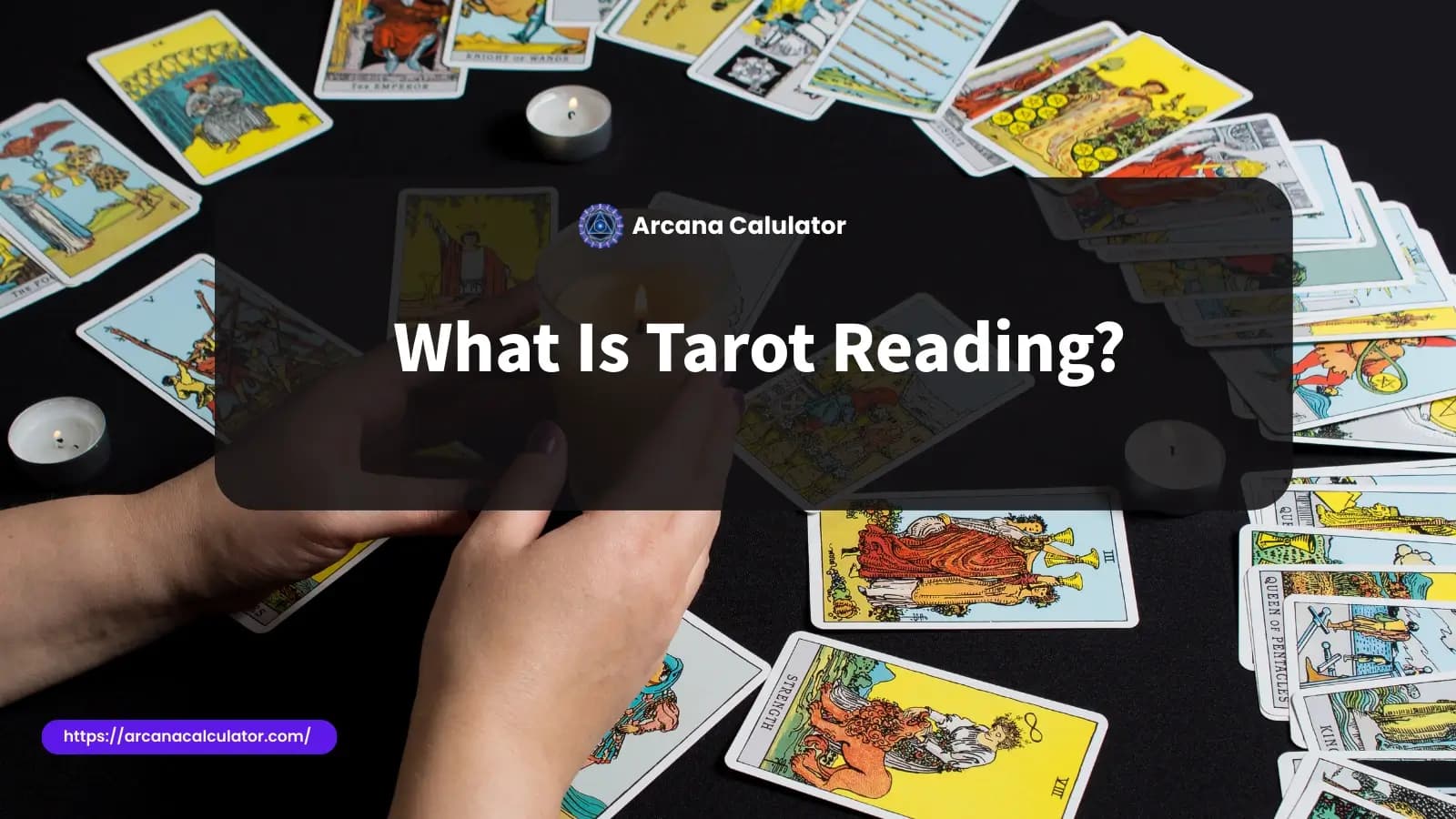
If you search for what tarot reading is, you usually land on one of two extremes: mystical promises about destiny or blunt dismissals that treat tarot like meaningless superstition.
In real use, tarot reading is much simpler and much more useful than either of those descriptions. It is a structured way of looking at a question through symbols, patterns, and context.
If you want the mechanics behind that, read our guide to how tarot cards work. If you want the hands-on process, jump to our step-by-step tarot reading guide. This page answers the broader beginner question: what tarot reading actually means.
Tarot Reading Is a Way to Interpret a Situation
Tarot reading is the practice of drawing tarot cards and interpreting them in relation to a question, theme, or moment in someone's life.
Some people use tarot for reflection. Some use it for spiritual guidance. Some use it to slow down and think more clearly about a problem they already feel tangled inside.
What tarot is not, at least in its most useful form, is a machine that spits out one guaranteed future. A card does not force an outcome. It highlights themes, tensions, blind spots, motivations, and possibilities.
What Happens During a Tarot Reading
A tarot reading usually begins with a question or area of focus. That could be broad, such as a relationship pattern, or specific, such as whether someone is approaching a decision from fear or clarity.
The reader then shuffles the cards, lays them out in a spread, and interprets both the individual cards and the larger pattern created by the group. Spread positions often matter. One position may describe the current energy, another the obstacle, another the advice.
A reading is therefore not just "this card means X." It is a conversation between symbol, question, and context.
What Tarot Cards Are Actually Interpreting
Tarot cards do not interpret reality the way a calculator interprets numbers. They interpret it symbolically.
A card such as The Hermit may point to solitude, inner work, caution, or withdrawal. Which meaning matters depends on the question, the surrounding cards, and the emotional truth of the situation.
That symbolic quality is what makes tarot useful for personal reflection. It often surfaces patterns people already sense but have not fully named.
What Tarot Can and Cannot Do
Tarot can help someone slow down, clarify a question, notice a pattern, or explore the emotional logic behind a decision.
It can also help someone reframe a situation they keep seeing too narrowly. That is often why a reading feels helpful even when it does not "predict" anything dramatic.
What tarot cannot do reliably is remove responsibility. It does not replace judgment, communication, or action. Used well, it clarifies agency rather than replacing it.
Major Arcana, Minor Arcana, and Why Structure Matters
A standard tarot deck contains 78 cards. These split into two groups: the Major Arcana and the Minor Arcana.
The Major Arcana usually points to larger themes, turning points, or archetypal lessons. The Minor Arcana deals more with everyday life, emotions, work, conflict, energy, and practical concerns.
Inside the Minor Arcana, the suits add another layer of meaning. Cups often lean emotional, Swords mental, Wands energetic, and Pentacles practical. That structure is part of what makes tarot readable instead of random.
The Best Next Step for Beginners
Once you understand what tarot reading is, the next question is usually whether you want to understand the mechanism or the practice.
If you want the practical workflow of laying out cards and reading a spread, go to How to Read Tarot Cards.
If you want to understand why the symbols feel meaningful in the first place, go to How Tarot Cards Work. That separation helps readers and helps search engines understand that these are different beginner questions rather than near-duplicate pages.