How Tarot Cards Work: Symbolism, Intuition, and Why Readings Feel Accurate
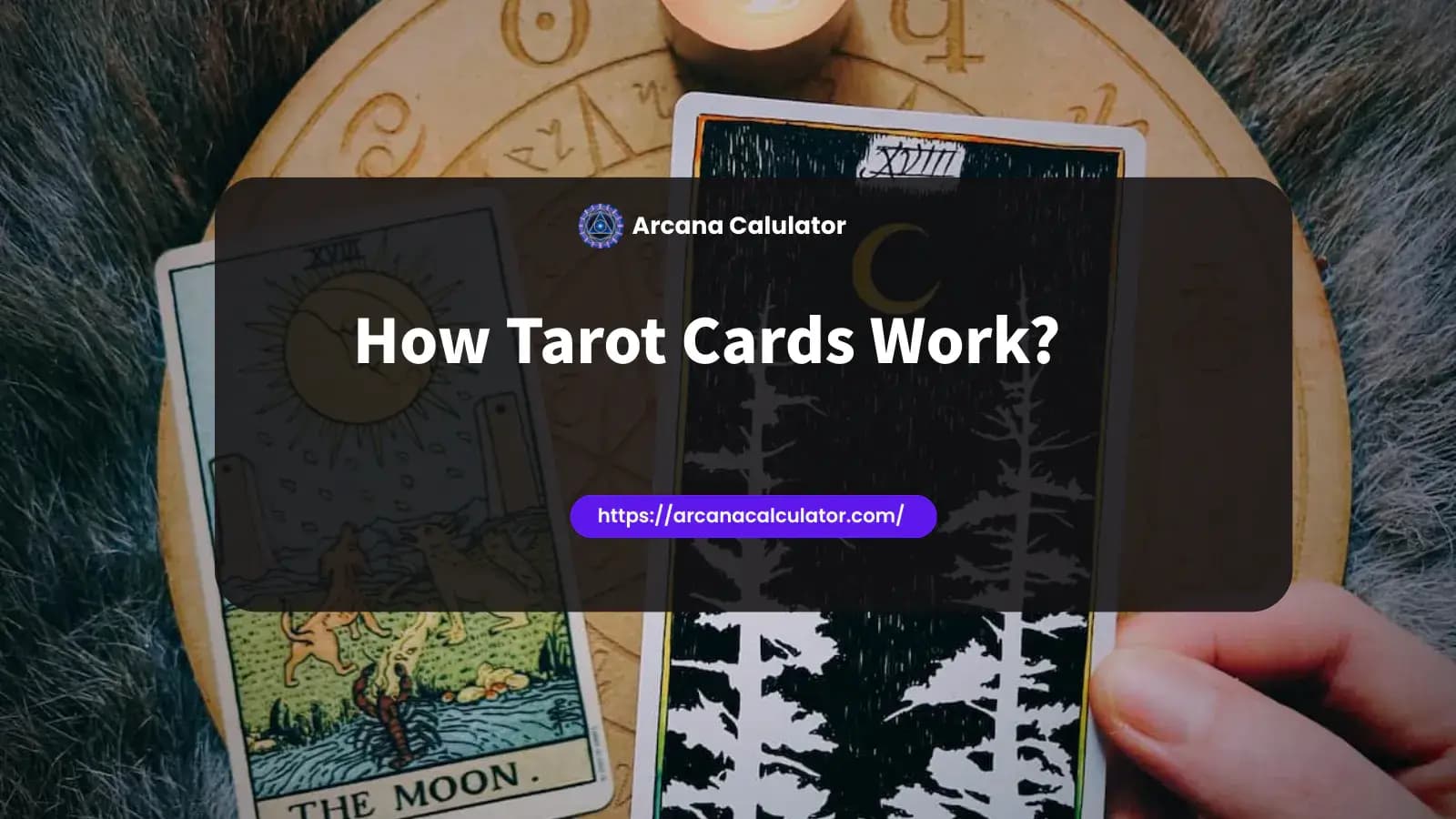
People ask how tarot cards work for two very different reasons. Some want to know whether the cards are "real." Others want to know why a reading can feel strangely relevant even when no one is making literal predictions.
The short answer is that tarot works through symbols, structure, and interpretation. The cards do not contain hidden messages waiting to be decoded mechanically. They provide a symbolic framework that becomes meaningful when applied to a real question.
If you need the basic definition, start with What Is Tarot Reading?. If you want the practical reading process, go to How to Read Tarot Cards. This page focuses on the mechanism behind the experience.
Tarot Starts With Symbols, Not Fixed Answers
Every tarot card is built from symbols people already recognize at some level: conflict, grief, hope, risk, attachment, endings, beginnings, power, and doubt.
These are not random decorations. They are recurring human themes expressed visually. That is why tarot can feel legible even to someone who has never studied it deeply.
A card such as The Tower does not work because everyone agrees on one sentence. It works because the image itself already suggests collapse, disruption, revelation, and loss of control. Symbolism carries the first layer of meaning.
Why Context Changes Card Meaning
Tarot does not work by attaching one permanent sentence to one card. Context is what turns symbol into interpretation.
The same card can land differently depending on the question, the spread position, and the surrounding cards. A hopeful card in an obstacle position may point to wishful thinking rather than optimism. A difficult card in an advice position may be asking for honesty rather than warning of disaster.
That is one reason tarot feels more like reading a scene than reading flashcards. Meaning emerges from relationship, not isolation.
Why Readings Often Feel Accurate
Tarot often feels accurate because it combines broad symbolic truth with a very specific human context.
First, the cards work with patterns that show up repeatedly in ordinary life: confusion, attraction, hesitation, ambition, grief, overthinking, and relief. Those patterns are common enough to be recognizable but specific enough to feel personal.
Second, the reading is tied to a real question. The card is not floating abstractly; it is being interpreted against a living situation already full of detail.
Third, people are often better at recognizing emotional truth than they are at naming it directly. Tarot creates a way for that recognition to surface.
What Intuition Actually Does in a Reading
Intuition in tarot is not magic replacing structure. It is the reader noticing what stands out, what feels emphasized, and how the symbols connect to the situation.
Two readers can draw the same spread and focus on different aspects of it because the reading is not only in the cards. It is also in the act of interpretation.
Good intuition usually improves with practice, because practice sharpens both symbolic memory and emotional pattern recognition.
Tarot Is Structured, Not Random
Tarot works partly because the system itself has internal structure.
- The Major Arcana carries larger themes and archetypes
- The Minor Arcana covers more everyday experiences
- Suits group emotion, thought, action, and material life
- Spread positions give the cards a job to do
That structure keeps tarot from feeling arbitrary, even though interpretation remains flexible.
What Tarot Is Good For
Tarot is especially good at helping someone slow down, articulate a question, notice patterns, and see multiple possibilities inside a situation.
It is less useful when someone wants the cards to remove all ambiguity from life or make decisions on their behalf.
If you want to put that into practice, the next page to read is How to Read Tarot Cards. If you are still orienting yourself to the overall topic, go back to What Is Tarot Reading?. Together, those pages separate the beginner journey into definition, mechanism, and process.