Why Uncertainty Feels Unbearable in Relationships
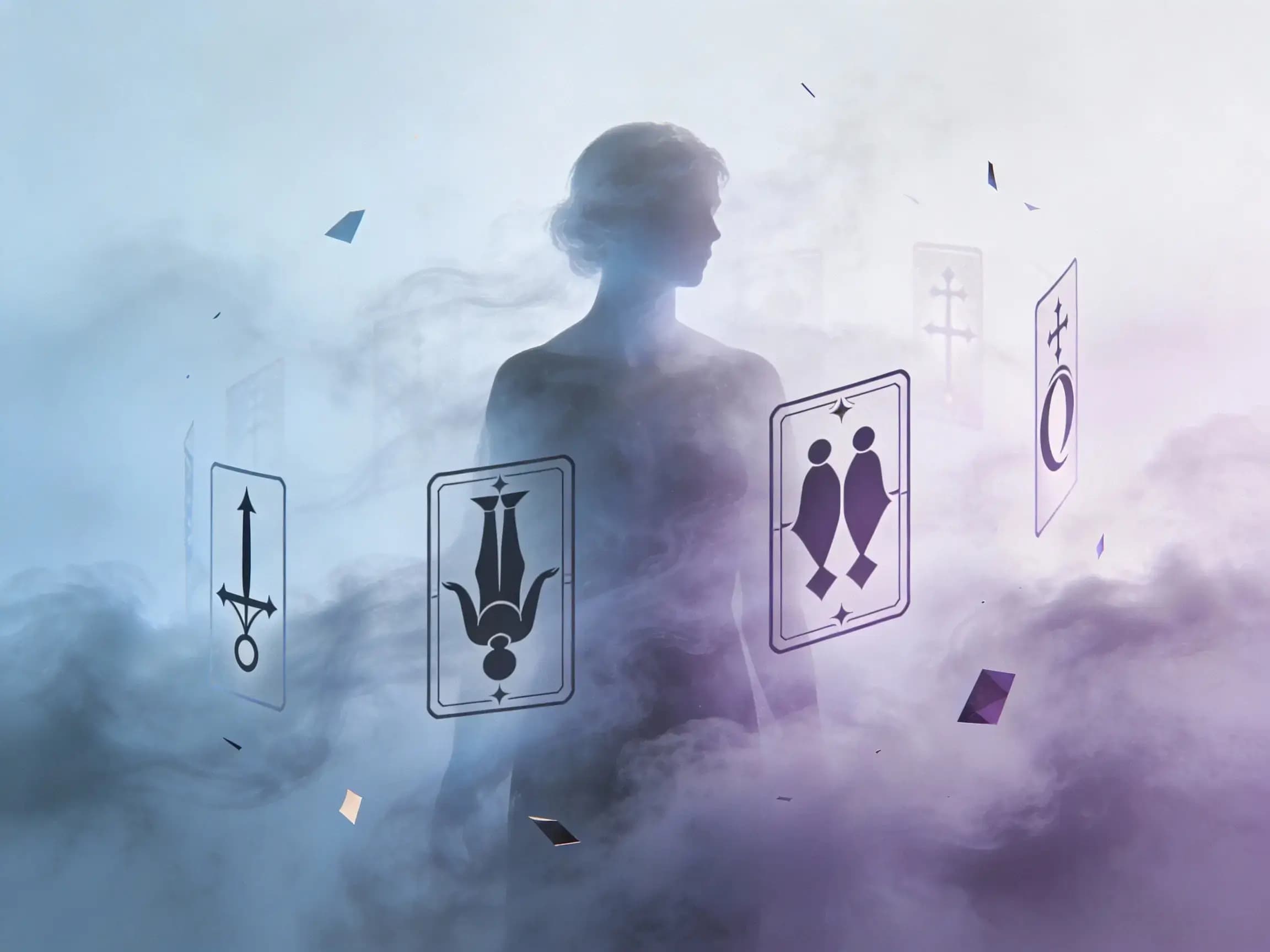
The moment people stop asking “what should I do”
There’s a specific point in relationship conversations where the question changes.
It’s not “What should I do next?”
It’s “Why does this feel so unstable?” I’ve heard this from friends after months of dating someone who’s “almost right.” I’ve heard it from people deep into long-term relationships. I’ve even heard it from myself, late at night, when nothing dramatic was happening—but nothing felt settled either.
What’s interesting is that this moment doesn’t usually trigger action. It triggers seeking.
People don’t immediately leave.
They look for something to consult. Why tools feel comforting when people don’t
When uncertainty shows up, people rarely say they want answers. What they want is permission to pause.
That’s where tools—especially symbolic ones—quietly enter the picture.
Tarot cards. Astrology charts. Compatibility quizzes. Even things that look analytical on the surface often play the same emotional role. They externalize the confusion.
I’ve noticed that people who claim they “don’t believe in that stuff” still find themselves oddly calm after a reading. Not because the outcome was convincing—but because someone, or something, helped them frame the question.
The relief doesn’t come from accuracy.
It comes from containment. Patterns repeat before beliefs change
A few years ago, I started noticing how often people ended up dating variations of the same person.
Different name. Different job. Same emotional arc.
They’d say things like, “I don’t know why this keeps happening,” but the language they used to describe attraction was remarkably consistent. Height. Ambition. Lifestyle. Emotional availability—spoken as preferences, but behaving like filters.
It reminded me of something I once stumbled upon while playing with a dating standards calculator. Not because it told me anything new, but because it forced me to articulate assumptions I’d never said out loud.
Seeing them quantified didn’t make them right or wrong.
It made them harder to ignore. And that’s uncomfortable.
Why people prefer mystery over adjustment
There’s a reason uncertainty feels safer than clarity.
Clarity demands change.
If the cards say, “Wait,” you can wait.
If the stars say, “Not aligned,” you can sigh. But if it becomes obvious that your standards, habits, or expectations are shaping the same outcome again and again—that’s not mystical. That’s actionable.
And action threatens identity.
So people stay in the fog. They romanticize intuition. They frame patterns as fate.
Not because they’re irrational, but because certainty often comes with responsibility.
The quiet role of reflection tools
What I’ve come to appreciate over time is that tools don’t need to predict the future to be useful.
Their real value is slower and less dramatic. They interrupt emotional momentum.
They force articulation. They surface trade-offs that feelings tend to blur.
Whether it’s a spread of cards or a numerical model, the function is the same:
it gives shape to something previously unspoken. And once something has shape, you can choose how seriously to take it.