Three of Swords - heartbreak, truth, and emotional release
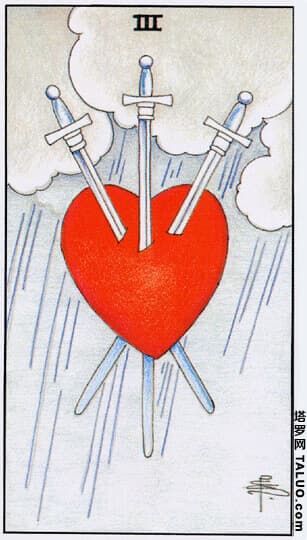
Three of Swords Overview
The Three of Swords is the tarot card of pain that can no longer stay abstract. It often appears when disappointment, separation, betrayal, grief, or a hard conversation pierces straight through the heart.
Unlike the Two of Swords, which pauses before a split is fully felt, the Three of Swords shows what happens when the truth lands emotionally. Something hurts, and denial is no longer doing its old protective job.
This card is not only about suffering. At its healthiest, it represents emotional honesty. It asks what truth has come through, what grief needs room, and how pain can move instead of hardening into bitterness.
Read this card in the wider Swords journey
These related guides add useful context and create stronger internal links across the Swords sequence:
- Ace of Swords: Read this first if you want the mental origin point: clarity, truth, and the first clean cut of insight.
- Two of Swords: Compare it with the defensive pause that often comes before heartbreak is fully admitted.
- Minor Arcana - Swords: Browse the full suit to see how thought, conflict, grief, and healing develop across the Swords arc.
For a broader comparison, pair it with Two of Swords and Four of Swords to explore related themes and archetypes.
Historical context and reading frame
In traditional tarot, threes often describe expansion, consequence, and movement after an initial choice or polarity. In the Swords suit, that movement can be sharp: ideas become unavoidable, tensions surface, and emotional impact catches up with mental reality.
A grounded modern reading does not reduce the Three of Swords to melodrama or guaranteed betrayal. It can point to heartbreak, difficult news, conflict between values, grief after loss, or the sober recognition that something painful is also true.
Symbolism of the Three of Swords
In the Rider-Waite-Smith image, three swords pierce a red heart while dark clouds gather overhead and rain falls across the background. There is no protective figure in the scene; the image is direct and emotionally exposed.
The card’s power comes from that simplicity. There is no distraction from the wound, no comforting story, and no way to mistake the emotional weather for anything mild.
- The heart: Emotional truth, vulnerability, attachment, and the part of us that feels pain personally rather than intellectually.
- The three swords: Words, realizations, conflicts, or circumstances that cut through illusion and leave a mark.
- The storm clouds: Mental pressure, grief, conflict, and the heavy atmosphere that often surrounds heartbreak or painful news.
- The rain: Release, sorrow, tears, and the emotional processing that follows a wound once it is acknowledged.
- The open background: Nothing is hidden here. The card emphasizes exposure, honesty, and the difficulty of pretending the pain is not real.
Together, these symbols show why the Three of Swords is so memorable: it names the wound clearly, but it also opens the possibility of honest healing.
Upright meaning: heartbreak, clarity, and the wound that must be felt
Upright, the Three of Swords often emphasizes:
- A painful truth: Something difficult may need to be seen, said, or accepted even if it breaks an illusion you wanted to keep.
- Emotional rupture: The card can mark separation, disappointment, betrayal, conflict, or a moment when trust is strained.
- Grief and disappointment: Not every wound is dramatic, but the card often signals real sadness that deserves acknowledgment rather than minimization.
- Honest expression: Sometimes the healing part of the card is the willingness to name what hurts and stop pretending it does not matter.
This card does not ask you to collapse into pain. It asks you to let the pain be real enough to teach you something accurate about the situation, the relationship, or yourself.
Reversed meaning: release, delayed grief, or a wound being reopened
Reversed, the Three of Swords often points to:
- Slow emotional release: A person may finally be crying, speaking, forgiving, or softening after holding pain inside for too long.
- Avoided grief: The wound may still be present, but the healing process is delayed because the pain is being intellectualized, minimized, or buried.
- Reopened hurt: Old heartbreak, resentment, or self-criticism may be getting triggered again and asking for deeper repair.
- Recovery after conflict: In some readings, the card suggests the storm is passing and emotional truth is beginning to create space for repair.
Reversed is not automatically lighter than upright. Often it describes what happens after the first impact: the long work of processing, releasing, and choosing not to keep bleeding from the same place forever.
Three of Swords in love, work, and personal growth
Love and relationships
Upright: In love, the Three of Swords can indicate heartbreak, emotional distance, betrayal, painful honesty, or the realization that a relationship cannot continue in the same form.
Reversed: Reversed, it can point to repair after conflict, grief that is finally being expressed, difficulty letting go of an old wound, or the slow rebuilding of trust.
Work and creative direction
Upright: In work, this card may reflect rejection, criticism, a disappointing outcome, team conflict, or the emotional cost of a truth that can no longer be ignored.
Reversed: Reversed, it may suggest learning from a setback, resolving a conflict, or recognizing that burnout and discouragement need attention before momentum can return.
Personal growth and spiritual practice
Upright: For growth, the card supports grief literacy, emotional honesty, boundary repair, and the courage to stop performing strength when the heart is actually hurting.
Reversed: Reversed, it asks whether healing is truly happening or whether pain is being recycled through rumination, avoidance, or a refusal to feel vulnerable.
Journal prompts for the Three of Swords
- What truth hurts right now, and what becomes possible if I stop arguing with the fact that it hurts?
- What part of this pain belongs to the present situation, and what part is activating an older wound?
- What would honest healing look like if I chose tenderness instead of numbness or self-attack?
Working with the Three of Swords
If you want to work with this card in a grounded way, try these practices:
- Somatic grounding: Place a hand on the chest and breathe slowly while naming the feeling without forcing it to disappear.
- Journaling: Write the story of the wound in two parts: what happened, and what meaning you have been attaching to it.
- Affirmation: I can face what hurts without making the wound my whole identity.
- Support: Choose one grounded act of care: a candid conversation, rest, therapy, prayer, or a practical boundary that protects your recovery.
Spiritual significance
Spiritually, the Three of Swords often represents broken-hearted clarity. It is the moment when the soul stops confusing comfort with truth and begins to learn compassion through honest feeling.
Its lesson is not that suffering is romantic or required. Its lesson is that pain, when met consciously, can clear illusion, deepen discernment, and reopen the heart in a wiser way.
Reading boundaries and practical cautions
The Three of Swords does not guarantee betrayal, separation, or tragedy, and it should not be used to justify suspicion without evidence. Tarot is a reflective practice, not a substitute for qualified medical, legal, financial, or mental health support.
If this card appears during a period of intense grief, conflict, or emotional instability, let it encourage honesty and support-seeking rather than fatalism. Real care may include time, rest, good information, and professional help.
Conclusion
The Three of Swords reminds us that pain can be clarifying. What breaks the heart may also reveal what is no longer sustainable, truthful, or worthy of silence.
When you meet this card well, you do not glorify the wound or rush past it. You let grief speak, take the truth seriously, and choose healing that is honest enough to last.
Continue the Tarot Journey
Related Tarot Cards
Ready to Calculate Your Arcana?
Use Arcana Calculator to find your Major Arcana tarot card by birth date and name. Get personalized numerology insights and spiritual guidance. Calculate yours now!
Calculate now